
Inspection & Testing · Installation · Maintenance
Room Integrity & Door Fan Testing
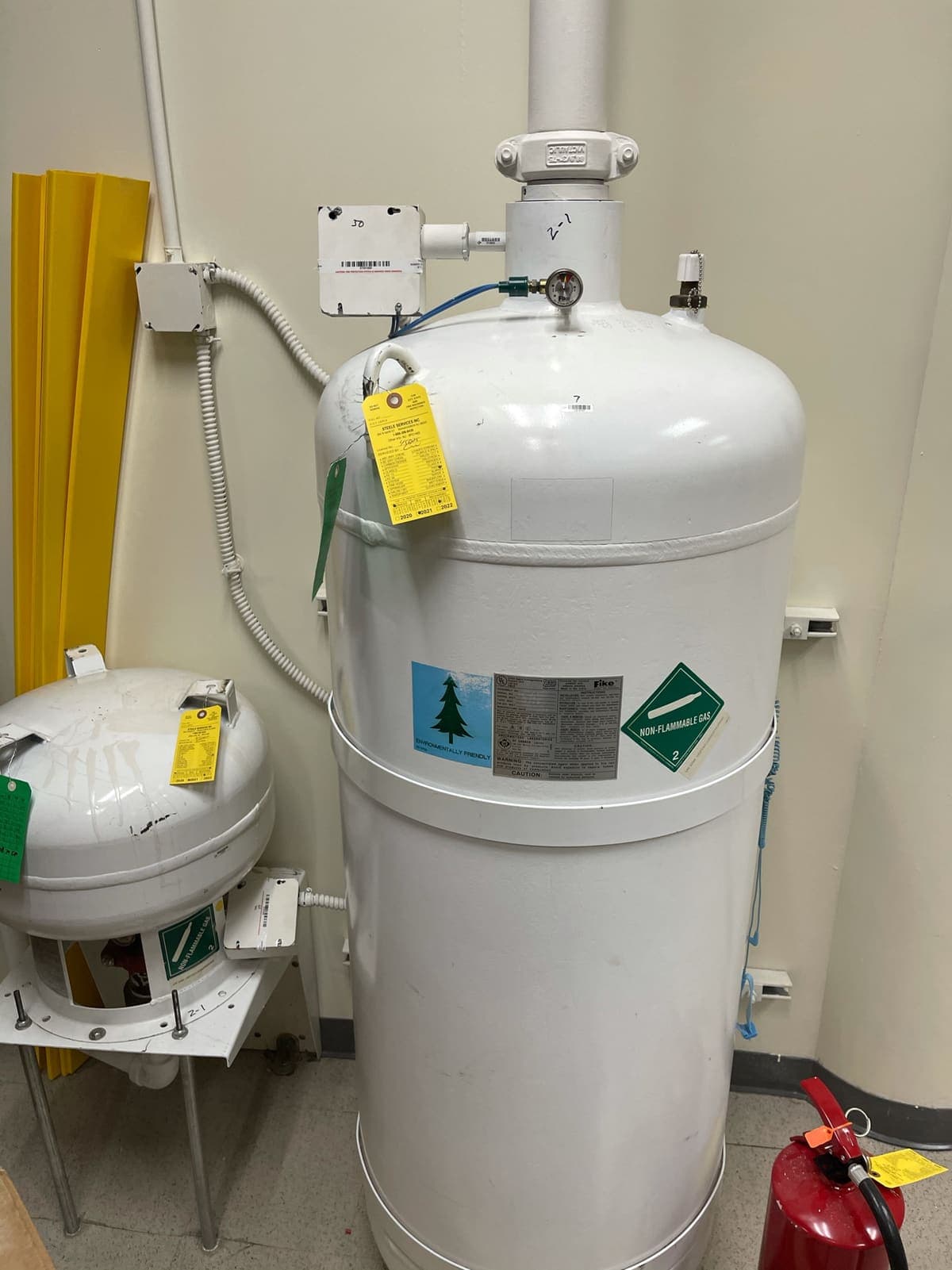
Clean agent only works if the room holds it. The door fan test measures how well yours still does — and what it would take to fix.
The door fan test is a five-year check that often goes overdue. We pressurize the protected space, measure exactly how fast it leaks, and tell you whether a discharge would still hold concentration long enough to put the fire out.
- Standard
- NFPA 2001 §5.5 — Enclosure Integrity
- Interval
- Five years, and after any enclosure change
- Method
- Calibrated door fan, pressurize and depressurize
- Deliverable
- Retention time calculation, pass/fail, leak map
- Remediation
- Sealing scope priced from the same visit
- Coverage
- NJ · PA · PHILA · DE
Core services
Inspection and testing, installation, maintenance.
We keep the full service history on file, so when we need to visit for maintenance we already know your system.
The Test
A calibrated fan in the doorway, the room under pressure, and a measured retention time.
- Enclosure pressurized and depressurized with a calibrated door fan
- Equivalent leakage area measured, not estimated
- Peak pressure and retention time calculated for your agent
- Pass/fail against the ten-minute hold requirement
- Every result on a report your AHJ and insurer will accept
Leak Diagnosis
A failed retention time tells you the room leaks; the survey tells you where.
- Smoke pencil and thermal survey of penetrations under pressure
- Cable tray, conduit and duct penetrations mapped
- Above-ceiling and raised-floor paths identified
- Dampers checked for full closure on discharge signal
- Leak map delivered with the report
Sealing & Retest
We seal the leaks the test found, then retest to show the new retention time.
- Fire-rated sealing of found penetrations
- Door sweep, gasket and hardware correction
- Damper actuator repair coordination
- Retest with before/after documentation
- Five-year recall so the next one is never missed
Common Questions
Room Integrity Testing — questions we get asked.
How often is a room integrity test required?
Every five years for clean agent enclosures, and after any change to the room that could affect its ability to hold the agent — new cable penetrations, altered ceilings, added doors or modified HVAC.
What is a door fan test?
A calibrated fan is fitted to the doorway and used to pressurise and depressurise the room, measuring how much it leaks. From that leakage the predicted hold time is calculated — how long the agent concentration would stay high enough to be effective.
What makes a room fail?
Almost always unsealed penetrations. Cable trays, conduit, pipe sleeves and gaps above the ceiling that were sealed at commissioning and opened up by every trade that worked in the room since.
Is it worth doing if the suppression system was just serviced?
Yes — they test different things. Servicing the system confirms the agent will discharge. The integrity test confirms the room will hold it once it does.
We work on what's already in your riser room
No rip-and-replace pitch on the first visit. We hold current manuals and parts references for most systems above — when a system genuinely can't be maintained any longer, we'll show you why before we quote a replacement.
Room Integrity & Door Fan Testing in trouble right now?
Call 1-888-306-8430 — the line is answered around the clock by a technician who can access your system information and start guidance on the phone.