
Inspection & Testing · Installation · Maintenance
Pre-Action Sprinkler Systems
A pre-action system is two systems that have to agree before water moves — a sprinkler system and a detection system. Kept in good order, it protects the room without putting your equipment at risk.
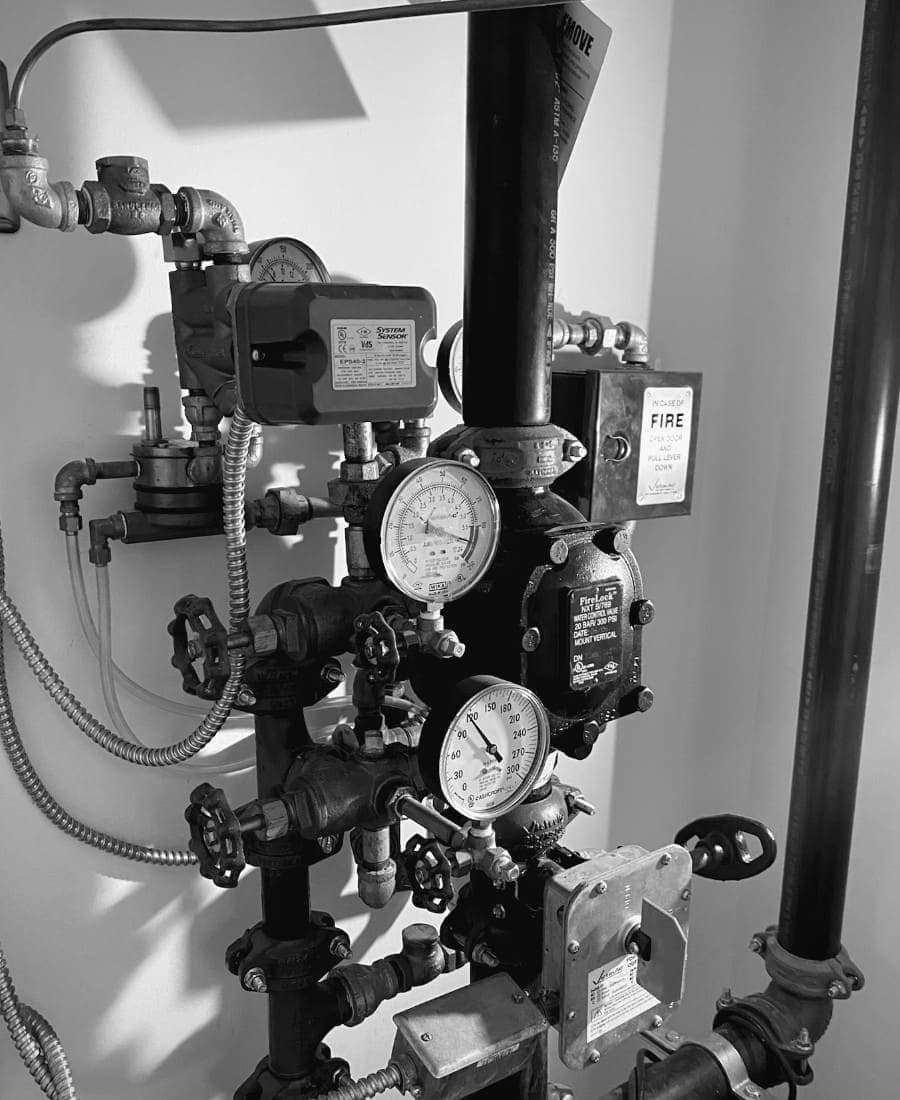
Single and double interlock pre-action, in data halls, switch rooms, archives and anywhere an accidental discharge costs more than the fire would. Air and nitrogen supervision, release circuit testing, trip testing and the five-year internal — inspected as one system.
- Standards
- NFPA 25 (water-based) + NFPA 72 (release)
- Types
- Single interlock, double interlock, deluge
- Supervision
- Air and nitrogen, pressure and low-air alarm
- Release
- Detection and release circuit tested end to end
- Reporting
- One report covering both halves of the system
- Coverage
- NJ · PA · PHILA · DE
Core services
Inspection and testing, installation, maintenance.
We keep the full service history on file, so when we need to visit for maintenance we already know your system.
Inspection & Testing
Both halves of the system tested by the same technician, on one visit, in one report.
- Air and water gauge verification, and replacement at the five-year interval
- Low-air alarm and supervisory signals tested at the panel
- Release circuit, solenoid, and detection functionally tested to NFPA 72 at the control panel
- Trip test on the required frequency, with reset and return to service
- Compressor and nitrogen supply checked for fill time and leaks
- Five-year internal obstruction and corrosion assessment
Installation
New pre-action systems and conversions where an accidental discharge would be costly.
- Single and double interlock pre-action for data halls and equipment rooms
- Releasing panel installation and integration with the building alarm
- Nitrogen generation and supervisory air upgrades
- Conversion from wet systems where the risk profile has changed
- Permit drawings, submittals and the authority having jurisdiction witness test
Maintenance & Troubleshooting
Trouble signals on a pre-action panel need someone who understands both the pipe and the circuit.
- Low-air and supervisory trouble diagnosed to the actual cause
- Compressor and nitrogen leak location and repair
- Drum drip, fitting and flare connection leak repair
- Alarm test line and waterflow device correction
- Spare head cabinet stocked to the listed count and temperature rating
- Emergency response around the clock
Common Questions
Pre-Action Sprinkler — questions we get asked.
How is a pre-action system inspected differently from a wet system?
It is two systems that have to agree, so it carries two sets of requirements — the water-based frequencies of a dry system, plus the detection and release circuit requirements. Splitting that between a sprinkler contractor and an alarm contractor is where the gaps appear.
What is the difference between single and double interlock?
Single interlock admits water to the pipe when detection activates. Double interlock requires both detection activation and a sprinkler head to open before water moves — a second layer of protection against accidental discharge in a room where water is the expensive outcome.
Why does the low-air alarm keep coming back?
Almost always a leak the compressor is compensating for — flare fittings, copper tubing, drum drips and nitrogen cabinet connections are the usual places. If the compressor takes half an hour to bring the system back to pressure, the system is unsupervised for that half hour.
How often do the gauges need replacing?
Air and water gauges carry a five-year interval, and a multi-zone data hall has a lot of them. Out-of-date gauges are the most common pre-action finding in our record by a wide margin.
We work on what's already in your riser room
No rip-and-replace pitch on the first visit. We hold current manuals and parts references for most systems above — when a system genuinely can't be maintained any longer, we'll show you why before we quote a replacement.
Pre-Action Sprinkler Systems in trouble right now?
Call 1-888-306-8430 — the line is answered around the clock by a technician who can access your system information and start guidance on the phone.